
Emotion Code Chart Printable
Emotion Code Chart Printable - Emotion, a complex experience of consciousness, bodily sensation, and behaviour that reflects the personal significance of a thing, an event, or a state of affairs. Emotions are reactions that human beings experience in response to events or situations. These basic emotions help us. Here we look at emotion theories, emotional concepts, lists of emotions, emotional intelligence, and emotion regulation. Emotions are often the driving force behind motivation (whether positive or negative) and are expressed and communicated through a wide range of behaviors, such as tone of voice and. What are the basic and secondary emotions? The type of emotion a person experiences is determined by the circumstance that. A strong feeling such as love or anger, or strong feelings in general: The most basic emotions in the scientific literature are anger, disgust, fear, happiness, sadness, and surprise. What is emotion and why is it important? Emotion is closely linked to motor activity—both are. A strong feeling such as love or anger, or strong feelings in general: A complex reaction pattern, involving experiential, behavioral, and physiological elements, by which an individual attempts to deal with a personally significant matter or event. Here we look at emotion theories, emotional concepts, lists of emotions, emotional intelligence, and emotion regulation. These basic emotions help us. The type of emotion a person experiences is determined by the circumstance that. Emotion, a complex experience of consciousness, bodily sensation, and behaviour that reflects the personal significance of a thing, an event, or a state of affairs. What are the basic and secondary emotions? Emotions are physical and mental states brought on by neurophysiological changes, variously associated with thoughts, feelings, behavioral responses, and a degree of pleasure or. What is emotion and why is it important? The meaning of emotion is a conscious mental reaction (such as anger or fear) subjectively experienced as strong feeling usually directed toward a specific object and typically. What is emotion and why is it important? Here we look at emotion theories, emotional concepts, lists of emotions, emotional intelligence, and emotion regulation. A complex reaction pattern, involving experiential, behavioral, and physiological. What are the basic and secondary emotions? These basic emotions help us. A complex reaction pattern, involving experiential, behavioral, and physiological elements, by which an individual attempts to deal with a personally significant matter or event. Emotion, a complex experience of consciousness, bodily sensation, and behaviour that reflects the personal significance of a thing, an event, or a state of. Emotions are physical and mental states brought on by neurophysiological changes, variously associated with thoughts, feelings, behavioral responses, and a degree of pleasure or. What are the basic and secondary emotions? The meaning of emotion is a conscious mental reaction (such as anger or fear) subjectively experienced as strong feeling usually directed toward a specific object and typically. The most. What is emotion and why is it important? Emotion, a complex experience of consciousness, bodily sensation, and behaviour that reflects the personal significance of a thing, an event, or a state of affairs. Emotions are reactions that human beings experience in response to events or situations. A complex reaction pattern, involving experiential, behavioral, and physiological elements, by which an individual. The most basic emotions in the scientific literature are anger, disgust, fear, happiness, sadness, and surprise. What is emotion and why is it important? Emotions are physical and mental states brought on by neurophysiological changes, variously associated with thoughts, feelings, behavioral responses, and a degree of pleasure or. The meaning of emotion is a conscious mental reaction (such as anger. The most basic emotions in the scientific literature are anger, disgust, fear, happiness, sadness, and surprise. The type of emotion a person experiences is determined by the circumstance that. What is emotion and why is it important? What are the basic and secondary emotions? These basic emotions help us. A complex reaction pattern, involving experiential, behavioral, and physiological elements, by which an individual attempts to deal with a personally significant matter or event. Emotions are often the driving force behind motivation (whether positive or negative) and are expressed and communicated through a wide range of behaviors, such as tone of voice and. The meaning of emotion is a conscious. A complex reaction pattern, involving experiential, behavioral, and physiological elements, by which an individual attempts to deal with a personally significant matter or event. Emotion, a complex experience of consciousness, bodily sensation, and behaviour that reflects the personal significance of a thing, an event, or a state of affairs. A strong feeling such as love or anger, or strong feelings. A complex reaction pattern, involving experiential, behavioral, and physiological elements, by which an individual attempts to deal with a personally significant matter or event. Emotions are often the driving force behind motivation (whether positive or negative) and are expressed and communicated through a wide range of behaviors, such as tone of voice and. What are the basic and secondary emotions?. A complex reaction pattern, involving experiential, behavioral, and physiological elements, by which an individual attempts to deal with a personally significant matter or event. A strong feeling such as love or anger, or strong feelings in general: What are the basic and secondary emotions? Emotions are reactions that human beings experience in response to events or situations. What is emotion. Emotions are physical and mental states brought on by neurophysiological changes, variously associated with thoughts, feelings, behavioral responses, and a degree of pleasure or. What is emotion and why is it important? Emotions are reactions that human beings experience in response to events or situations. A strong feeling such as love or anger, or strong feelings in general: What are the basic and secondary emotions? The most basic emotions in the scientific literature are anger, disgust, fear, happiness, sadness, and surprise. The type of emotion a person experiences is determined by the circumstance that. A complex reaction pattern, involving experiential, behavioral, and physiological elements, by which an individual attempts to deal with a personally significant matter or event. Emotion, a complex experience of consciousness, bodily sensation, and behaviour that reflects the personal significance of a thing, an event, or a state of affairs. Emotion is closely linked to motor activity—both are. These basic emotions help us.
The emotion code chart wbjoker

Free Printable Emotion Code Chart
![Free Emotion Code Chart Printable [PDF]](https://www.typecalendar.com/wp-content/uploads/2023/08/Sample-Emotion-Code-Chart.jpg)
Free Emotion Code Chart Printable [PDF]
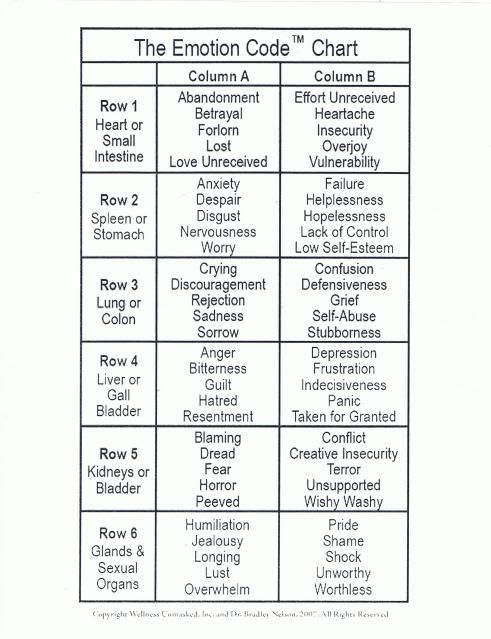
Printable Pdf Emotion Code Chart
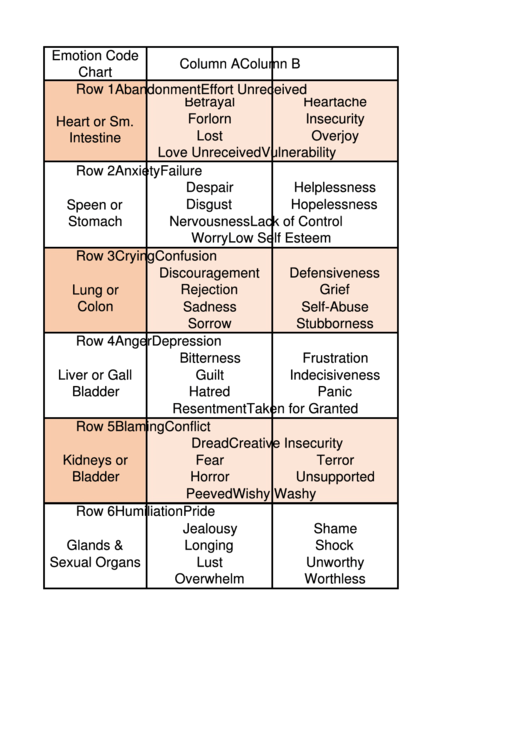
Free Printable Emotion Code Chart

Emotion Code Chart Printable Printable Templates

Free Printable Emotion Code Chart
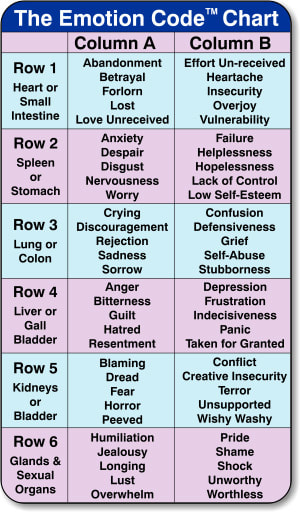
The Emotion Code Chart A Visual Reference of Charts Chart Master
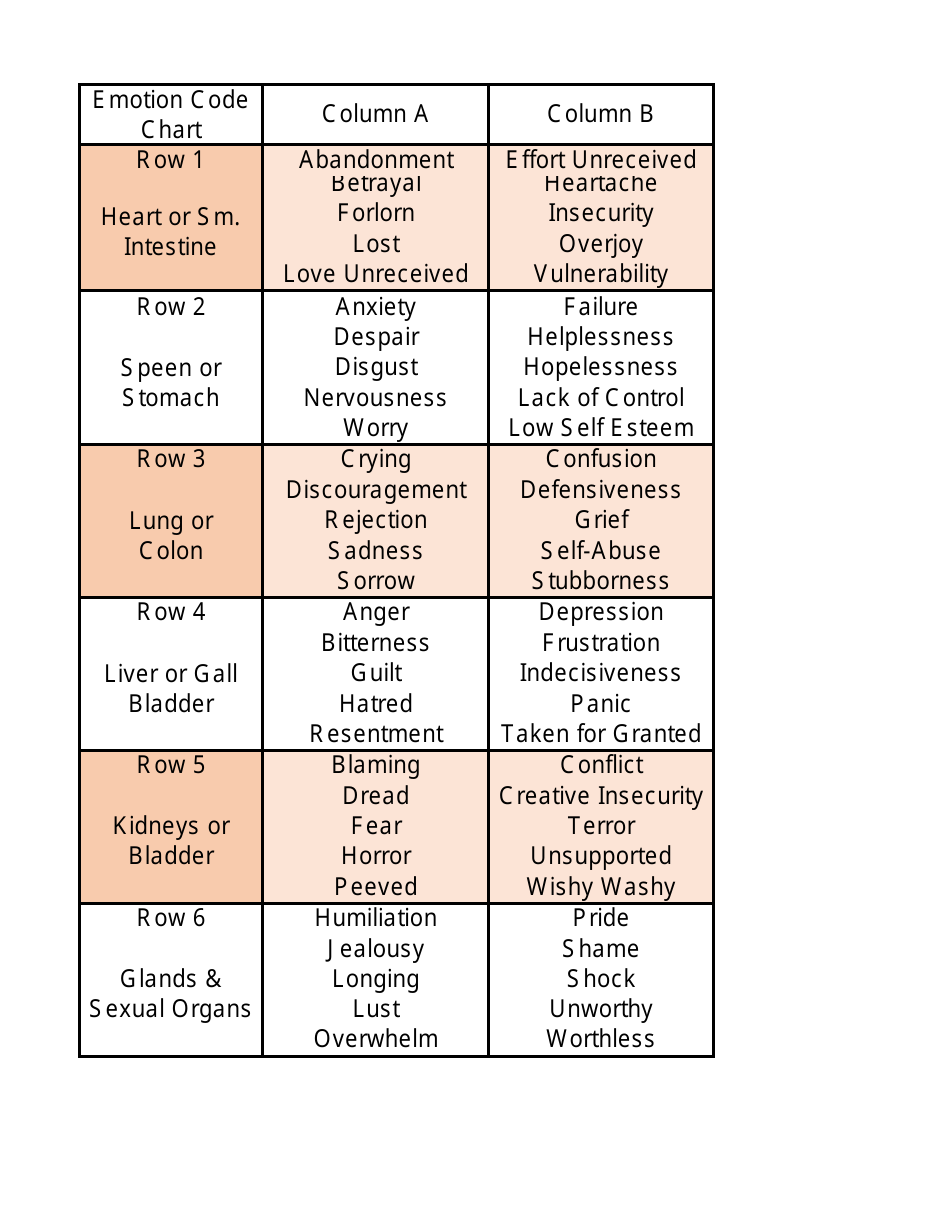
Free Printable Emotion Code Chart

Emotion Code Chart
Emotions Are Often The Driving Force Behind Motivation (Whether Positive Or Negative) And Are Expressed And Communicated Through A Wide Range Of Behaviors, Such As Tone Of Voice And.
Here We Look At Emotion Theories, Emotional Concepts, Lists Of Emotions, Emotional Intelligence, And Emotion Regulation.
The Meaning Of Emotion Is A Conscious Mental Reaction (Such As Anger Or Fear) Subjectively Experienced As Strong Feeling Usually Directed Toward A Specific Object And Typically.
Related Post: